
Reviewed · LAS VEGAS MUSEUMS AND EXHIBITS
Las Vegas: REAL BODIES at Horseshoe Las Vegas Entry Ticket
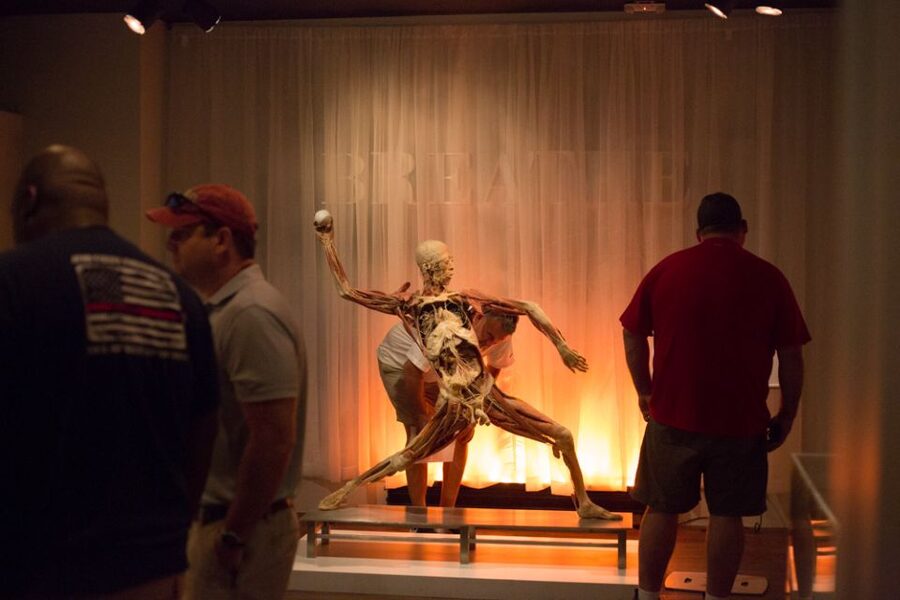
REAL BODIES puts actual human anatomy at the center of a Las Vegas attraction, with more than 20 preserved bodies and over 200 specimens arranged in rooms built around science, art, and human emotion. The exhibit shows how breathing, hunger, the heartbeat, and other basic functions shape our lives.
I like the mix of straightforward anatomy and imaginative installations such as the Wall of Bones, Fan Wall, Kinetic Sculptures, and catacomb-style setting. I also like that this is a self-guided visit, so you can move slowly through difficult material or pass on displays that feel too intense. The main caution is that one family found some specimens less lifelike than expected, and the exhibition can feel very cold.
Key points to know before you go
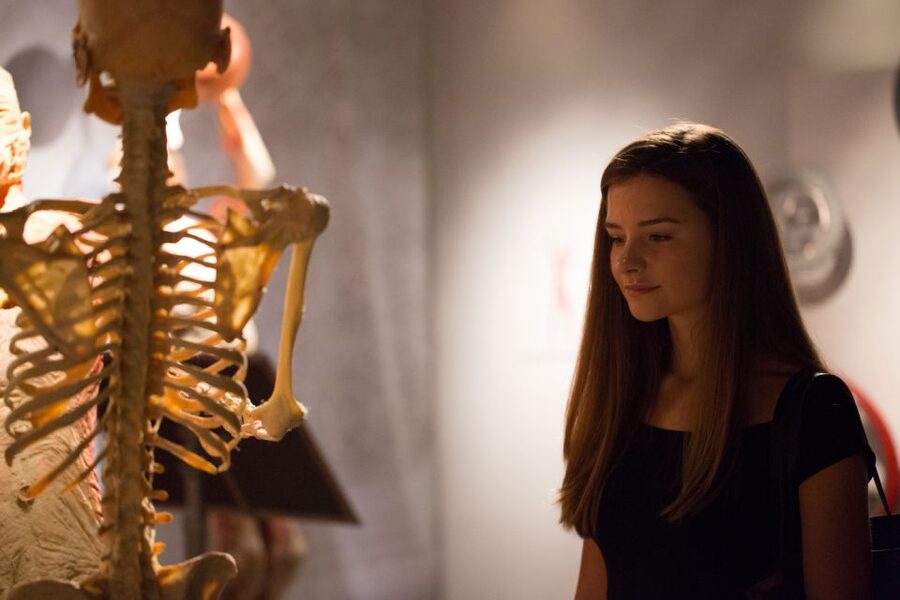
- More than 20 preserved human bodies: The main attraction is a close look at the human form beneath the skin.
- Over 200 anatomical specimens: Displays focus on body systems and essential functions, not just full-body figures.
- Art is part of the experience: The Wall of Bones, Fan Wall, Kinetic Sculptures, and catacomb-style room add a distinctly Las Vegas presentation.
- Plan for a cool interior: Bring a light sweater, especially if you want time to read the displays.
- Good for curious older children and adults: One parent found it educational for children, while another found the material and presentation unsuitable for her two daughters.
- Parking takes planning: Use the Horseshoe and Paris self-parking garage or the outdoor lot near Flamingo Road, with fees that vary.
What REAL BODIES at Horseshoe Las Vegas actually offers
REAL BODIES is not a quick casino side attraction built around a few odd medical objects. It is a full exhibition about the human body, using preserved human specimens, anatomical samples, written explanations, and art installations.
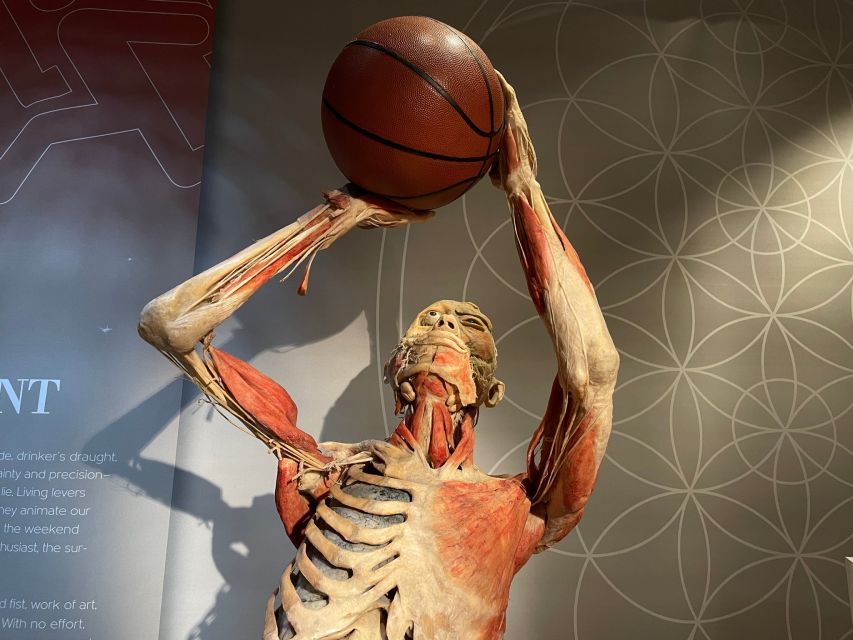
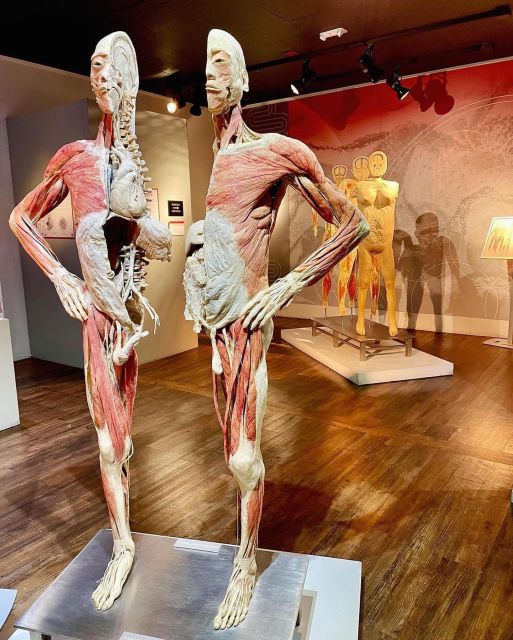
The collection includes more than 20 preserved humans and over 200 anatomical specimens. That scale matters. You are not simply looking at one skeleton or a single model of the heart. The displays let you compare the whole body with individual organs, systems, and structures.
The exhibition also tries to place anatomy in a wider human setting. Breathing, hunger, the beat of the heart, and other body functions are presented as more than mechanical processes. They are tied to survival, emotion, culture, and the long human interest in understanding what happens beneath the skin.
You should expect a self-guided visit rather than a tour led by a named guide. No guide names or scheduled talks are provided, so the pace is yours. That works well if you want to stop and read. It also means the quality of your visit depends on how much time and attention you give each room.
More museums and exhibits in Las Vegas:
- Ticket for ARTE Museum Las Vegas
★ 5.0 · 2,106 reviews - Las Vegas Mob Museum Admission Ticket
★ 4.5 · 1,295 reviews - Meow Wolf’s Omega Mart at AREA15
★ 4.0 · 798 reviews
The opening rooms: seeing the body beneath the skin
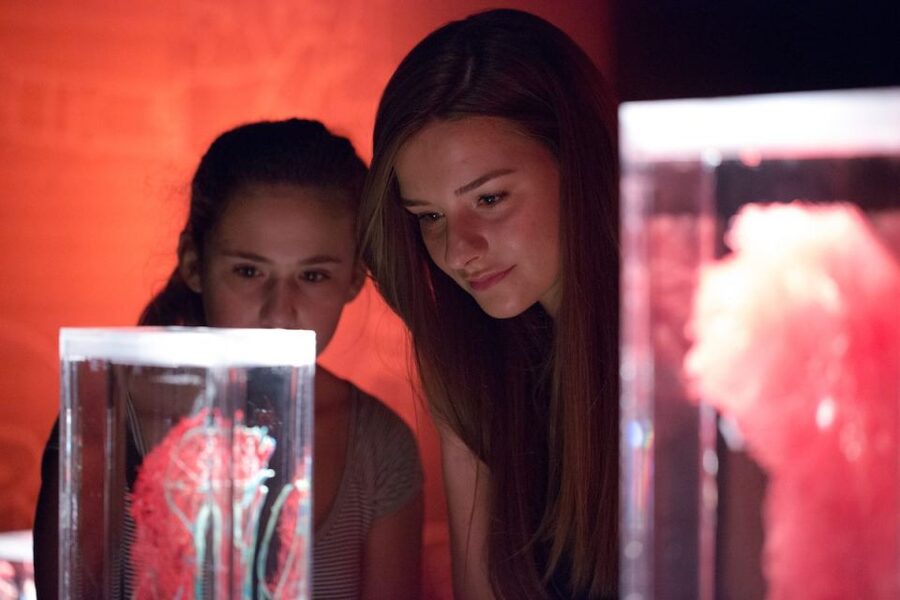
The strongest reason to visit is simple: you get to see human anatomy in a form that diagrams and textbooks cannot quite match. A preserved body shows proportion, connection, and placement in three dimensions.
The exhibition’s specimens are arranged so you can consider the body as a working whole. You then encounter individual structures that help explain how the body functions. The point is not shock for its own sake. The point is to make familiar actions, such as breathing or feeling a heartbeat, physically understandable.
I find that approach useful because most of us think about the body from the outside. REAL BODIES shifts your attention inward. You see how much structure is involved in something as ordinary as taking a breath.
Still, this is not a polished museum of wax figures. The display depends on your comfort with genuine human specimens. The preservation process can make some forms look remarkably clear, while other specimens may seem stiff or artificial. One French visitor who had seen another bodies exhibition felt that REAL BODIES looked too much like plastic. That is an important expectation to set before buying a ticket.
Breathing, hunger, and the rhythm of the heart
Several sections focus on basic body functions, including breathing, hunger, and the heart. These subjects give the exhibition a useful structure. Instead of presenting anatomy as a long list of organs, the rooms connect body parts with actions you perform every day.
The breathing displays can help you think about the body as a coordinated system. Air, muscles, organs, and movement all work together, even though breathing normally feels effortless. The exhibit uses anatomy to show the physical work behind that simple act.
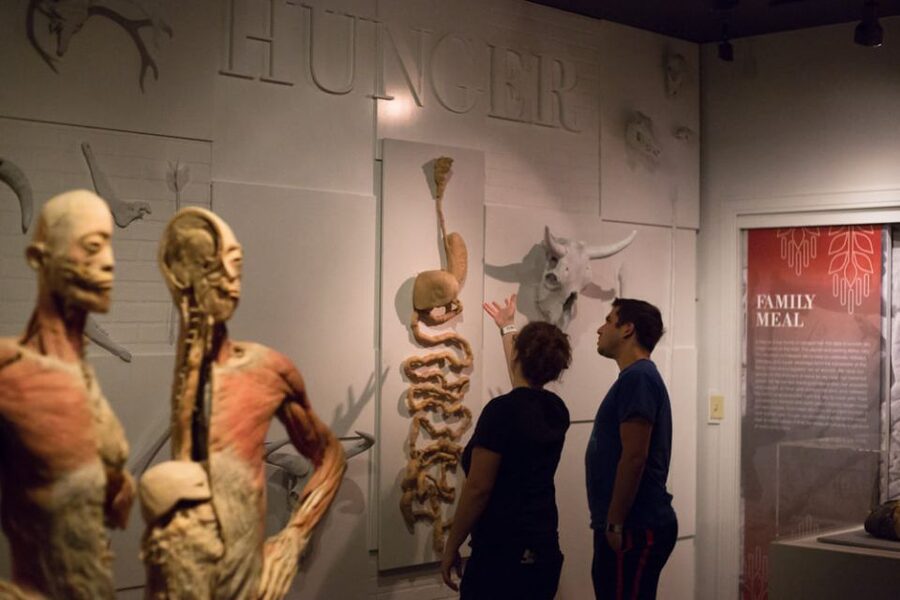
Hunger provides another human connection. It is not only a matter of food and digestion. Hunger has cultural and emotional meaning, too. By placing this function in a broader human context, the exhibit asks you to consider how the body influences behavior and how people have tried to understand those urges across time.
The heartbeat is perhaps the most immediate theme. You do not need a medical background to recognize the importance of the heart. The displays connect its physical rhythm with emotions and cultural meaning, giving the science a more personal edge.
These rooms are likely to appeal to anyone who enjoys learning through visual evidence. If you prefer a traditional art museum or a light-hearted attraction, the presentation may feel heavy. REAL BODIES asks you to think about mortality as well as anatomy.
Wall of Bones, Fan Wall, and the art around the specimens
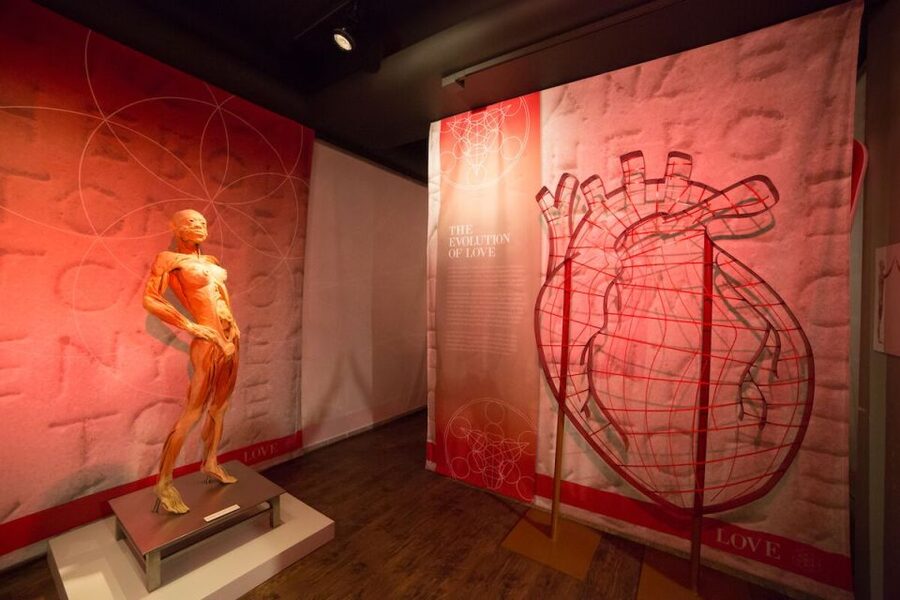
The exhibition is not made up of specimen cases alone. Local Las Vegas artists contribute installations that shape how you move through the space.
The Wall of Bones is the most direct example. It turns skeletal material into a visual composition, shifting your attention from individual anatomy to pattern and form. The display can feel artistic, but it also keeps the subject firmly tied to the human body.
The Fan Wall uses repeated forms and movement to create another visual break. It gives the exhibition a less clinical feel and helps vary the pace between anatomy-focused rooms.
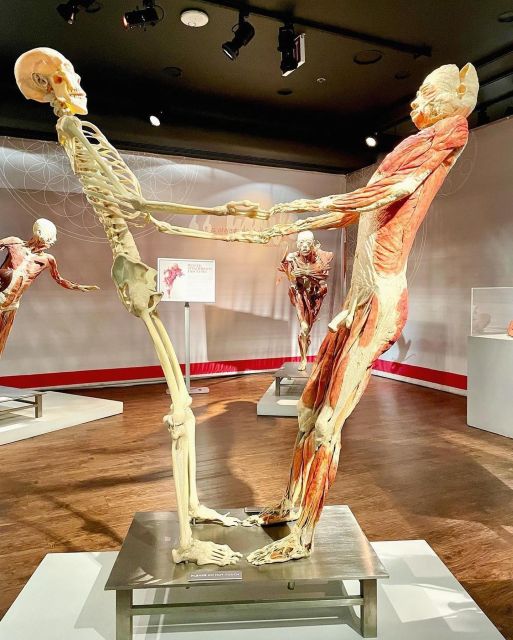
Kinetic Sculptures add motion to a subject that can otherwise feel still and formal. Their purpose is not only decoration. They help the exhibit move between science and art, showing that human anatomy can be examined for structure, meaning, and visual impact.
You will also find a recreated catacomb-style environment. This room gives the exhibition a darker, more theatrical mood. It may appeal to you if you enjoy atmosphere, but it can also make the visit feel more intense for children or anyone sensitive to death-related imagery.
These installations are useful because they prevent the exhibition from becoming a sequence of technical diagrams. They also make clear that this is designed as an emotional experience, not just a classroom lesson.
A few more Las Vegas tours worth weighing up before you book
- Las Vegas Strip: The High Roller at The LINQ Ticket
★ 4.6 · 4,266 reviews - High Roller Wheel Admission Ticket at The LINQ
★ 4.5 · 3,379 reviews - Las Vegas: STRAT Tower Observation Deck Ticket
★ 4.5 · 1,469 reviews - Las Vegas: High Roller Entry Ticket with In-Cabin Open Bar
★ 4.6 · 1,278 reviews
How the display may feel for children and families
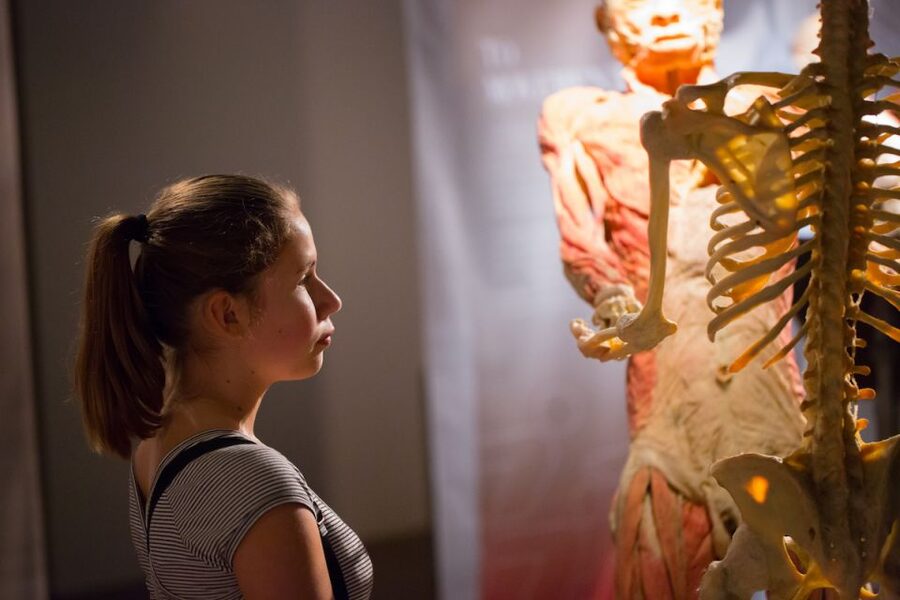
The educational content can work well for families, but age and temperament matter. One parent described the exhibition as educational and appreciated seeing what people look like underneath the skin. That is the kind of curiosity REAL BODIES can serve very well.
Another parent visited with two children, ages 9 and 10. One child liked the experience, while the other did not. The parent also felt that the specimens looked less realistic than expected and had to move through the exhibition quickly because of the cold temperature.
That mixed reaction is useful guidance. Do not assume that a child who enjoys science will automatically enjoy preserved human bodies. Talk about the subject before you go. Explain that the exhibit contains real human specimens and that some rooms may feel serious or unsettling.
There is no need to force a child through every display. Since the visit is self-guided, you can move past a section, pause outside a room, or keep the visit brief. The admission is valid for one day, but that does not mean you need to spend a long stretch inside.
For adults, the exhibit may be easier to appreciate as a conversation starter. You can discuss anatomy, art, mortality, and the cultural meaning of the body without needing a guide or formal lecture.
How much time to allow inside
The ticket is valid for one day, but no fixed visit duration is stated. Your time inside will depend on how closely you read the explanations and how comfortable you are with the subject.
I would treat this as a focused museum stop rather than an all-day attraction. A quick visit may give you the main impression of the full-body specimens and major installations. A slower visit gives you time to understand the body systems and consider the cultural material around them.
The cold interior can affect your pace. Bring a sweater so you do not rush simply to get warm. This is especially important if you are visiting with children or want to read the displays carefully.
The exhibition’s self-guided format is convenient, but it also means there is no guide keeping you engaged. If you skim museum labels, you may finish quickly and feel that the ticket was expensive. If you take time with the anatomy and installations, the visit has more value.
Check the opening time carefully on your chosen date. From November 20 through 22, 2025, the exhibit closes at 3:00 PM, with final entry at 2:00 PM. That special schedule makes an early visit essential.
Is the $30 ticket good value?
At $30 per person, REAL BODIES is not a bargain basement casino stop. The value depends on your interest in anatomy and on how fully you use the exhibition.
The price covers entry to a collection of more than 20 preserved humans and over 200 anatomical specimens. It also includes the surrounding art installations and themed environments. Compared with a short attraction that takes only a few minutes, this gives you more substance.
The ticket is easier to justify if you enjoy science museums, medical history, visual art, or unusual educational attractions. It can also fill a useful hour or two when you want a break from casino floors, shopping, or shows.
The value is weaker if you expect a polished, highly realistic presentation at every display. One visitor felt that the specimens looked artificial compared with another bodies exhibition. That reaction points to a real risk: the word real describes the specimens, but it does not guarantee that every preserved form will look natural to your eyes.
There is also no food or drink included, and food and drinks are not allowed inside. Plan to eat before or after the visit rather than expecting a café within the exhibition.
Getting to the exhibit and handling the parking
The exhibition is at Horseshoe Las Vegas, in the center of the Strip area. You can park in the self-parking garage serving both Horseshoe Las Vegas and Paris Las Vegas.
An outdoor lot along Flamingo Road is another option, near the Sports Book entrance. Parking fees vary, so include that cost in your budget rather than treating the $30 ticket as the entire expense.
If you are already staying nearby or walking along the Strip, the location makes REAL BODIES easy to add to a larger day. If you are driving only for the exhibit, check the parking cost and opening hours first. A shorter visit combined with paid parking can make the total price feel high.
The activity is wheelchair accessible. Since the visit is self-guided, you can set your own pace through the rooms. The available information does not provide details about every display or route, so anyone needing specific access information should confirm it before arrival.
The practical drawbacks to consider
The biggest drawback is emotional, not logistical. Real human specimens are not for everyone. Some people find the experience fascinating and educational. Others may feel uncomfortable with the preserved bodies, bones, and catacomb-style setting.
The second issue is presentation. The exhibit aims for a blend of science, art, and drama. That makes it more engaging than a bare medical display, but it also means the experience may feel theatrical rather than purely scientific.
The third issue is temperature. Bring a light layer. One family found it cold enough to shorten the visit, which is a needless problem when a sweater solves it.
Finally, the exhibition is non-refundable. Check the date, closing time, and your own comfort with the subject before purchasing. A ticket bought on impulse is harder to justify if you arrive late or discover that preserved human anatomy is not your kind of attraction.
Who should book REAL BODIES?
I would recommend it to adults and older children who are curious about anatomy and comfortable with serious material. It suits people who enjoy unusual museums, medical displays, and exhibits that connect science with emotion and culture.
It may also work well for a school-minded family, provided you prepare children for what they will see. The self-guided format gives you control, and the educational value is clear.
I would be more cautious if your main goal is light entertainment or if you want every specimen to look natural and lifelike. You may prefer a more traditional museum presentation instead.
Should you book this Las Vegas exhibit?
Book REAL BODIES if you want an educational stop with genuine human specimens, strong visual installations, and a subject that stays with you after you leave. The heart, lungs, bones, and other structures are presented in a way that can make ordinary body functions newly interesting.
Skip it if you dislike medical exhibits, are sensitive to death-related imagery, or expect a warm, family-friendly attraction with a playful tone. Bring a sweater, allow enough time to read, and check the hours carefully, especially for November 20 through 22, 2025. For the right visitor, $30 buys a thoughtful and unusual museum visit. For the wrong one, it can feel cold in every sense.
FAQ
Where is REAL BODIES located?
REAL BODIES is located at Horseshoe Las Vegas in Nevada.
How much does admission cost?
The listed price is $30 per person.
What does the ticket include?
The ticket includes entry to the REAL BODIES exhibition.
How many human specimens are on display?
The exhibition includes more than 20 preserved humans and over 200 anatomical specimens.
Is the exhibition suitable for children?
Children may find the exhibition educational, but the preserved human bodies and serious subject matter may not suit every child. One parent visited with two children, ages 9 and 10, and found that they reacted differently.
Is REAL BODIES wheelchair accessible?
Yes, the activity is wheelchair accessible.
Where can I park?
You can use the self-parking garage serving Horseshoe Las Vegas and Paris Las Vegas, or the outdoor lot along Flamingo Road near the Sports Book entrance. Parking fees vary.
Can I bring food or drinks inside?
No. Food and drinks are not allowed inside the exhibition, and they are not included with admission.
Newly reviewed around Las Vegas
- Airport Transfer Private Luxury SUV Service★ 4.5 · 22 reviews
- Sandbox -Shooting Range Package★ 5.0 · 11 reviews
- Red Rock Canyon Talking GoCar Adventure — Fun, Self-Drive Tour★ 5.0 · 134 reviews
- RuPaul’s Drag Race LIVE! at the Flamingo Las Vegas★ 4.0 · 121 reviews
- Small Group Hoover Dam, Powerplant & O’Callahan Bridge Tour★ 5.0 · 17 reviews
- Sunrise Red Rock Canyon Self-Guided Electric Bike Tour with Hotel Pick-up★ 5.0 · 25 reviews
- Private Roundtrip Transfer: To Las Vegas by Luxury Limo★ 4.5 · 46 reviews
- Scorpions – Coming Home to Las Vegas: 60 Years of The Scorpions★ 4.5 · 6 reviews
Las Vegas Museums and Exhibits, compared.



Titanic: The Artifact Exhibition at the Luxor Hotel and Casino
Read our review →
Paradox Museum in Las Vegas: Exit Reality, Enter Fun Illusions
Read our review →
Browse the lists this tour appears in