
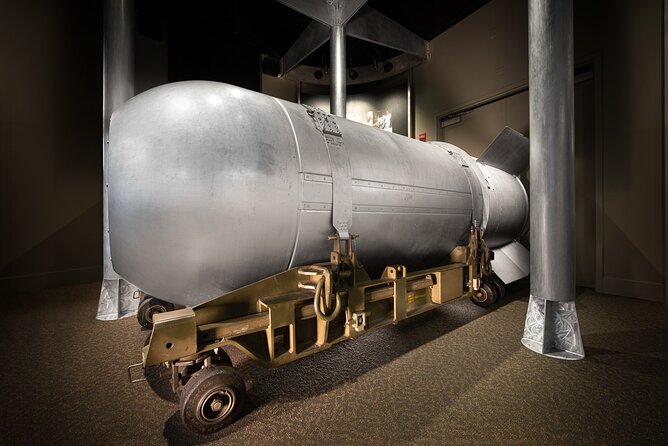
Reviewed · LAS VEGAS MUSEUMS AND EXHIBITS
Atomic Museum Admission Ticket
The Atomic Museum offers a clear look at one of America’s most unsettling chapters: the development and testing of nuclear weapons. You’ll move from the Manhattan Project and wartime science to Nevada test sites, rocket engines, cryptography, public fear, and the cheerful pop culture that grew around the atomic age.
I like the museum’s wide historical range and its serious collection of photographs, artifacts, and scientific displays. I also like that you set your own pace, with helpful floor staff and an optional audio guide if you want more explanation. The main drawback is size: some people will finish in about an hour, and parts of the presentation may feel dated or text-heavy.
Key points to know before you go
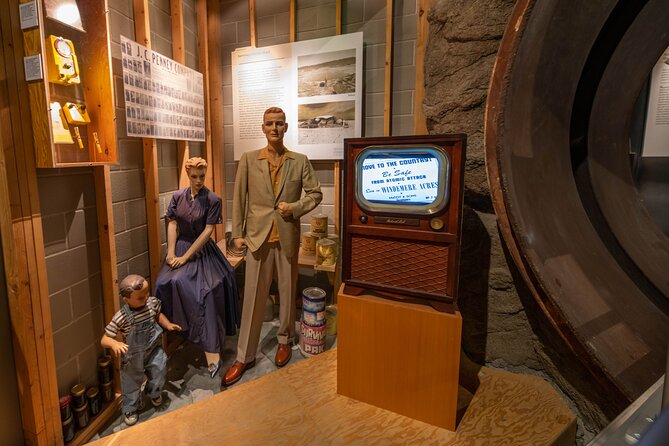
- The museum is near the Las Vegas Strip: You can trade casino noise for a focused history lesson without committing to a full-day outing.
- Plan on 1 to 2 hours: The visit is self-guided, so your time depends on how closely you read the displays.
- The subject goes far beyond the bomb itself: Expect science, politics, secrecy, testing, cryptography, rocket engines, and popular culture.
- Optional headphones add context: You can browse independently or choose a guided audio experience.
- The $29 advance price can be strong value: The price is notably lower than the reported walk-up admission of $50, with a higher price for admission plus guided touring.
- It is best for curious adults, history fans, and older children: Some material is dense, and the mood can turn solemn.
Why this museum belongs beyond the Strip
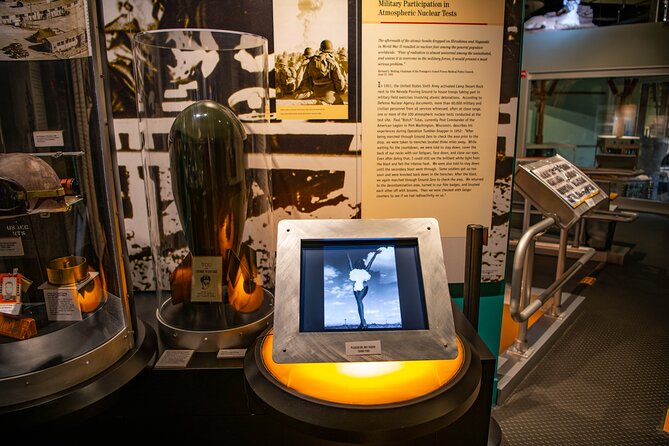
Las Vegas is famous for neon, casinos, and quick entertainment. The Atomic Museum gives you a different view of the city, one tied to the Nevada Test Site and the national nuclear weapons program. That change of pace is the appeal. You are still close to the main tourist zone, but the subject asks you to slow down and think.
The museum was created to preserve the history connected with the Nevada Test Site and to make that history available to the public. It also has a national role, preserving and explaining the United States nuclear testing program under a congressional mandate.
That mission gives the visit more weight than a collection of old military objects. The displays connect government decisions, scientific work, public messaging, secrecy, and the human impact of testing. You are not being shown only machines and dates. You are being asked to consider how nuclear development changed American life.
I especially like this setting for anyone who has recently watched a film or documentary about the atomic age. The museum can give you the background that popular culture often compresses into a few dramatic scenes. It also works well if you know very little about the subject, since the exhibits move through the story in broad stages.
More museums and exhibits in Las Vegas:
- Ticket for ARTE Museum Las Vegas
★ 5.0 · 2,106 reviews - Las Vegas Mob Museum Admission Ticket
★ 4.5 · 1,295 reviews - Meow Wolf’s Omega Mart at AREA15
★ 4.0 · 798 reviews
Starting with the Manhattan Project and wartime science
One of the early parts of the museum deals with United States atomic bomb development during World War II. This section helps you see the scale of the scientific and political effort behind the weapon.
You might find photographs, explanatory panels, and objects that connect laboratory work with wartime decision-making. The displays are designed for self-guided use, so you can read the central points quickly or spend more time with the details.
This is one area where the museum’s tone is useful. It does not treat atomic development as a simple story of scientific triumph. The subject includes secrecy, military pressure, political calculation, and moral questions. The result is a more complete picture of the period.
If you have already studied the Manhattan Project, this part may feel familiar. Its value comes from seeing that chapter placed beside what followed: testing in Nevada, public demonstrations of power, and the long life of nuclear policy.
Nevada testing, science, and the machinery of the atomic age
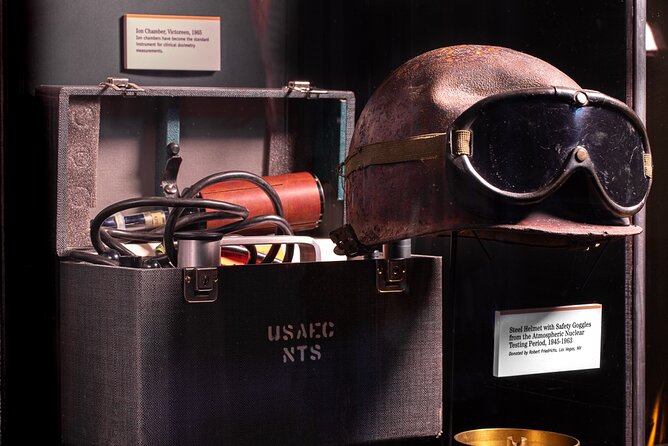
The museum’s main strength is its focus on the Nevada Test Site and the country’s testing program. You’ll learn about the science behind nuclear explosions and the way testing became part of national security policy.
This is also where the visit can feel most eerie. The displays are not designed as a haunted attraction, yet photographs, artifacts, and accounts of testing create a sober mood. The subject is difficult to keep at a safe distance when you see the physical evidence and read the explanations side by side.
The exhibits also reach into rocket engines and related scientific technology. That broader approach helps explain how atomic research fitted into the larger military and space-era push for advanced engineering.
I would not expect a technical museum with every scientific question answered in textbook detail. Instead, you get a readable public history of the science, politics, and secrecy surrounding the program. Some visitors will want more depth, but the format works for a short Las Vegas outing.
Cryptography and the hidden work behind public events
The cryptography section is one of the more distinctive parts of the museum. It reminds you that nuclear history was not only about laboratories, test towers, and aircraft. It also depended on hidden messages, secure communication, and the protection of sensitive information.
This section gives the visit a welcome change of subject. After reading about explosives and test sites, you can consider the less visible work that supported military planning and government secrecy.
I find displays like this especially helpful because they connect the atomic program with a wider history of intelligence and communications. You may not spend as long here as in the main testing galleries, but it adds a different kind of tension to the visit.
Same base, a completely different kind of day out of Las Vegas:
- Grand Canyon West, Hoover Dam Stop and Optional Lunch and Skywalk
★ 5.0 · 19,535 reviews - Grand Canyon West, Hoover Dam Stop, Breakfast, Lunch & Skywalk
★ 5.0 · 12,194 reviews - Half-Day Mojave Desert ATV Tour from Las Vegas
★ 5.0 · 7,350 reviews - Grand Canyon West Bus Tour with Hoover Dam and Optional Skywalk
★ 4.0 · 7,224 reviews
Pop culture, public fear, and the atomic lifestyle
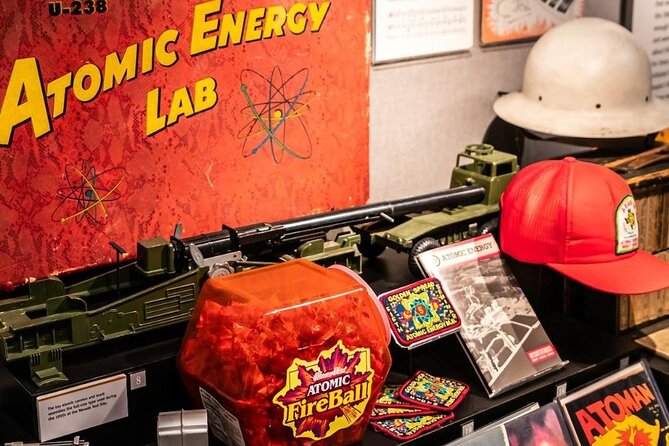
The museum also examines the way atomic ideas entered popular culture. Expect paraphernalia and displays that recall how nuclear technology appeared in advertising, entertainment, design, and everyday public discussion.
This contrast is one of the most interesting parts of the experience. The same period that produced fear of destruction also produced playful imagery, optimistic consumer products, and fascination with the future. The museum shows how Americans could treat the atomic age as both a threat and a source of excitement.
For you, this section may be the easiest way into the subject. You do not need a strong background in military history to recognize the odd mix of anxiety and enthusiasm. The pop culture displays make the period feel less distant and more like a real part of modern life.
The treatment is not all comic or nostalgic. The lighter material sits beside serious information about testing and national policy. That contrast keeps the museum from becoming either a dry military archive or a collection of retro curiosities.
How the self-guided visit works
Your admission is primarily self-guided. You can walk through the exhibits at your own speed, read selected panels, and decide how much time to give each section.
That flexibility is a real benefit in Las Vegas. You can make the museum a one-hour stop between other plans, or stay closer to two hours if you want to read the material carefully. One particularly dedicated approach is to make a first pass for the overall story, then go back through the galleries to study the placards and take photographs where permitted.
The museum also offers headphones for a guided experience. I would consider them if you prefer spoken explanation or if you find large amounts of written information tiring. They cost more than the basic admission, but the audio option can make the displays easier to follow.
Floor staff may also add useful context. A volunteer docent can bring personal expertise and answer questions as you move through the galleries. Since the standard ticket does not promise a private guide, treat this as a helpful addition rather than the main structure of the visit.
The self-guided format has one limitation: you must create your own rhythm. If you rush, you may miss the connections between sections. If you read every panel, the visit can feel longer and more serious than a typical attraction near the Strip.
Is $29 a fair price?
At $29 per person, advance admission is reasonable for a Las Vegas museum, particularly if you spend close to two hours inside. The value is strongest when you take time with the displays rather than treating the museum as a quick photo stop.
The price also matters because walk-up admission has been reported at $50 per person, while admission with guided touring has been listed at $75. Booking the lower advance price can make a major difference for couples and families.
That said, value depends on your interest. If nuclear history, military science, politics, or twentieth-century culture does not appeal to you, the museum may feel too serious or too text-heavy for the cost. One hour is enough for a broad look, but you will get more from the ticket if you read and reflect.
I would compare it with other paid attractions in Las Vegas by asking what kind of afternoon you want. This is not a flashy ride or a large interactive complex. It is a focused museum that gives you context, artifacts, and a subject rarely covered with this much attention in the city.
Allow one to two hours, and choose your timing
The museum is open daily from 9 a.m. to 5 p.m. A morning visit gives you a quiet start and leaves the rest of the day for other plans. An afternoon visit works if you want a break from the Strip before dinner or evening entertainment.
The listed visit length is about one to two hours. I would reserve the full two hours if you plan to use headphones, read most of the text, or revisit sections. If you mainly want the main story and a look at the objects, you may be finished sooner.
Because the museum is near public transportation, you do not need to build the visit around a special excursion. A mobile ticket also keeps the arrival simple. Confirmation is provided at booking, and the attraction is open to service animals.
The admission is non-refundable and cannot be changed after purchase. Check your day carefully before paying, especially if your Las Vegas schedule is packed with reservations.
Who will get the most from the visit?
I would recommend the Atomic Museum to:
- People interested in the Manhattan Project and Cold War history
- Anyone curious about the Nevada Test Site
- Film viewers who want more background on the atomic age
- Museum fans who enjoy photographs, artifacts, and explanatory panels
- Couples looking for a thoughtful break from casinos
- Families with older children who can handle serious historical material
- Visitors interested in science, secrecy, cryptography, or rocket technology
I would be more cautious if you want constant interaction, dramatic entertainment, or a large number of hands-on exhibits. The museum can feel dull if you do not enjoy reading. Some displays may also strike you as dated, particularly if you expect a highly modern presentation.
Still, the strongest parts are unusually focused. The combination of atomic science, Nevada testing, cryptography, rocket engines, and pop culture gives you more variety than the name alone suggests.
Small details that improve the experience
Book the $29 mobile ticket in advance if that price is available for your date. The difference from reported door pricing is large enough to justify planning ahead.
Bring patience for written material. You do not need to read every panel, but the museum’s meaning often sits in the captions and background notes rather than in the objects alone.
Consider headphones if you want a guided explanation. The self-guided route gives you freedom, while the audio option may help you connect the exhibits into one story.
Give extra time to the cryptography section, the Nevada testing material, and the displays about atomic-age culture. These sections provide some of the best variety and keep the visit from becoming a straight march through military history.
Do not expect the museum to leave you feeling cheerful. The tone is informative, but the subject naturally carries tension. That serious mood is part of its purpose.
Should you book the Atomic Museum?
Book it if you want a thoughtful, compact museum visit that explains how nuclear science shaped American politics, technology, public culture, and Nevada itself. The advance price of $29 is appealing, and the self-guided format lets you fit the museum into a busy Las Vegas day.
Skip it if you want a fast, highly interactive attraction or if you have little patience for reading. For most history-minded visitors, though, this is a worthwhile change from the Strip, especially when paired with a film or book about the atomic age. Allow up to two hours, use the optional headphones if you want more guidance, and arrive ready for a serious look at a subject that still affects the world today.
FAQ
Where is the Atomic Museum located?
The Atomic Museum is in Las Vegas, USA, near public transportation and close enough to the Strip to work as an easy change of pace from casino attractions.
How much does admission cost?
The admission ticket described here costs $29 per person. The price is for advance admission with a mobile ticket.
How long does the visit take?
You should allow about 1 to 2 hours. Your timing depends on how much of the written material you read and whether you use the optional headphones.
What are the opening hours?
The museum is open Monday through Sunday from 9 a.m. to 5 p.m. for the stated operating period ending January 20, 2027.
Is the visit guided?
The basic visit is self-guided. Optional headphones are available, and floor staff or a volunteer docent may provide additional information during your visit.
What subjects does the museum cover?
The displays cover the Manhattan Project, atomic bomb development during World War II, Nevada testing, nuclear science, politics, secrecy, cryptography, rocket engines, and atomic-age pop culture.
Is a mobile ticket available?
Yes. The experience includes a mobile ticket, and confirmation is received at the time of booking.
Are service animals allowed?
Yes. Service animals are allowed at the museum.
Can I cancel or change my ticket?
No. The ticket is non-refundable and cannot be changed for any reason.
Newly reviewed around Las Vegas
- Airport Transfer Private Luxury SUV Service★ 4.5 · 22 reviews
- Sandbox -Shooting Range Package★ 5.0 · 11 reviews
- Red Rock Canyon Talking GoCar Adventure — Fun, Self-Drive Tour★ 5.0 · 134 reviews
- Small Group Hoover Dam, Powerplant & O’Callahan Bridge Tour★ 5.0 · 17 reviews
- Sunrise Red Rock Canyon Self-Guided Electric Bike Tour with Hotel Pick-up★ 5.0 · 25 reviews
- RuPaul’s Drag Race LIVE! at the Flamingo Las Vegas★ 4.0 · 121 reviews
- Scorpions – Coming Home to Las Vegas: 60 Years of The Scorpions★ 4.5 · 6 reviews
- Private Transfer to Las Vegas Airport (LAS)★ 4.0 · 4 reviews
Las Vegas Museums and Exhibits, compared.



Titanic: The Artifact Exhibition at the Luxor Hotel and Casino
Read our review →
Paradox Museum in Las Vegas: Exit Reality, Enter Fun Illusions
Read our review →
Browse the lists this tour appears in